Showing posts with label insulation. Show all posts
Monday, June 26, 2017
Blinkered energy efficiency focus brings death and dispair
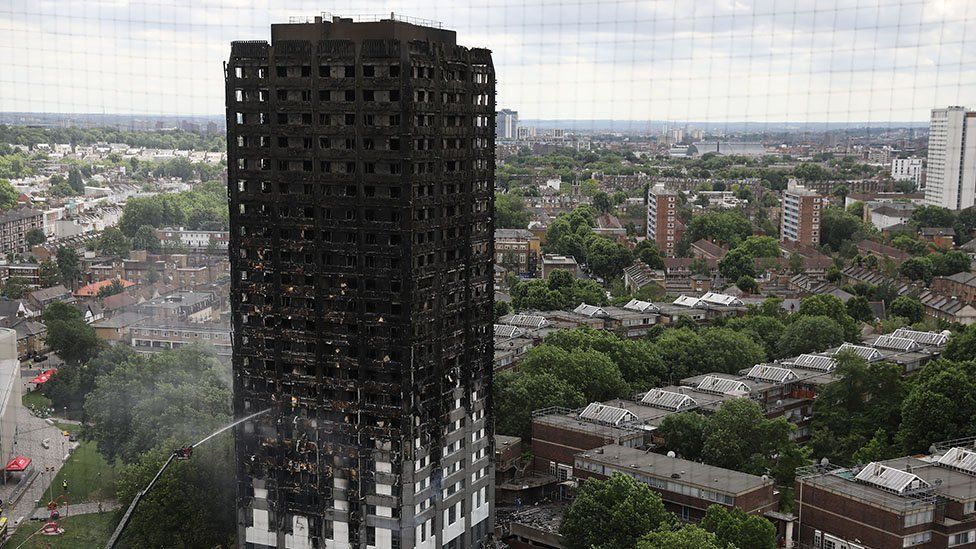
This tragic fire has been attributed to a faulty fridge freezer and the cladding that was put onto the building. So how could a simple electrical fault cause the deaths of so many and strike fear into many more living in and around tower blocks in the UK?
We have been on a drive for the past few years to reduce carbon emissions. This is laudable as climate change is bar far the biggest threat facing the natural world. However, this drive has been blinkered. We have dumbed down the issue to one of carbon and carbon alone. Governments and industry like this, as they think that it can be a. measured and b. profitable. However, when you are purely focused on cutting carbon emissions you miss out on the beautiful complexity of life and the systems that surround, and are embedded into, it.
At Grenfell, the problem that was overlooked was fire risk. What happens when you cover a building with a flammable covering and you don't fit fire breaks? Well, we all know what can happen now. So what went wrong? Well one of the key issues, that underpin so much of the construction industry, is that or testing and specification. Many of our testing regimes are old, tired and not fit for purpose. They are rarely updated or questioned as entire industries are built on them. Companies have developed products that meet the basic test levels and they don't want to go through the cost of having to change these and make better ones. The complexity of the industrial structure also allows these factors to get lost. Main contractors, sub contractors, system suppliers, building control, planning etc all have their say and it makes it very easy for key things to be assumed rather than checked and insisted upon. The focus in the process is money and time, not quality. We await to hear the findings and recommendations, but one can predict that pinning this onto one party will be difficult / impossible as really it is the whole capitalist system is in the dock and no-one in power wants to find that guilty!
This can be seen to full effect in Fishwick, Preston. Never heard of it? Not surprising as the whole debacle is being covered over by the Government and Industry. 387 homes had External Wall Insulation (EWI) fitted, again for all the best intentions. All have failed. 100% failure. Now each of these homes has mould and damp problems.
In this instance it appears (believe me you have to know how and where to dig to get any information on this whatsoever) that the EWI used was one of the standard products. However, against all the advice of groups like the STBA and the BRE (i.e. those people who know about this stuff), they slapped this EWI onto traditional solid walled properties. Now on paper this is fine. The whole industry thinks that this is standard practice and they even offer a 'warranty' to go along with it (this is of course a complete waste of time and not worth the paper it is written on - ask CIVALLI (http://www.civalli.com/)).
The trouble is that the moisture test that the whole industry is based on is fundamentally wrong! The standard even says that it will not work in in-situ conditions. It only looks at water vapour in a one dimensional manner. Last time I looked water came in liquid and solid form as well as vapour. Water also appears to have the ability to go both in and out of a structure. It even has the audacity to move sideways. So the whole industry is based on a one dimensional world with only one state of existence. I think that even the least enlightened know that the world is not quite like that. However, all the technical decisions about insulation is based on these tests. No wonder that Fishwick went wrong. They must have three dimensions, water and ice up there! Who is going to pay for this? Well, I will let you make up your own minds whether it will be the contractor, the 'insurance' industry or the tax payer.
So, if you have 3 dimensions where you live and / or it rains or freezes at any time then you too might face similar issues.
If we are to avoid Grenfells and Fishwicks (and the many others that exist - these are just the biggies) then we have to be smarter. We have to use the right tests to get answers that might actually happen in the real world. We have to realise that the world is a complex and interlinked place. What we do in the name of carbon reduction has other implications. It can cause fire spread, it can cause mould and damp issues, it can cause structural failure, it can cause health problems....... It also can have its benefits, of course, in many cases we are able to reduce emissions and make homes warmer etc, but there is not much point doing this to the properties where we ruin them in the process! This is very much the situation for solid walled and narrow cavity properties (these make up around 35% of our building stock!)
The STBA and others have been saying for many years now that we have to look at things in the round; holistically. We also have to understand how products work in the REAL world, not just on a bench in a testing laboratory. we have to take this knowledge and apply it to each individual case. One size fits all is blatantly false. We have to use our skills and experience wisely, not just follow outdated and inappropriate testing regimes. Unfortunately this goes against the common thinking that the construction industry needs to be dumbed down so that even the least educated can get jobs in it. We should celebrate the fact that our building stock is varied and complex and train our crafts people and professionals appropriately. Some people have the knowledge on how to do this right (and hence do it once), but do we get a look in? The inertia and power of the mainstream industry is enormous and they don't want any boats rocked thank you very much.
So, we know how to avoid Grenfells and Fishwicks, but Government doesn't want to listen to the voices of reason and truth. It wants easy solutions that address the needs of now, so it turns to Industry for answers. The whole of the Each Home Counts review (that references Preston / Fishwick) is being run by Industry. It doesn't fill one with joy and hope. We really do need to wake up to see how the system works and who it actually works for.
I am not a do-nothing type of person, I agree that we need to do the right things and address the issues like climate change, BUT we have to be clever and learn from mistakes, not cover them up. We need to make it easy for people to use their homes in a less carbon intensive manner, this might be using EWI, but we need to use the right materials in the right way otherwise we are just going to have to do it all over again in the future. That is a waste of time, money, resources and carbon!
I might have a rant now about modern buildings: It is accepted that ALL new homes (yes the ones that the House Builders are building now) will all need retrofitting for energy efficiency in the future. What are we doing people???? Can't we see that Redrow, Wimpey, .... all need to be told to build carbon negative homes NOW? Trouble is Government is too weak in the face of big business. It would be laughable if it weren't so serious.
Knowledge is power. We need to get the answers to Fishwick out in the open. We need to ask questions of our politicians, we need to question the integrity and focus of industry, we need to demand proper recompense for mistakes in the construction industry, we need to act within the constraints of fairly allocated planetary resources. We are effectively been trodden on by uncontrolled capitalism in pursuit of the free market. Well the free market only seeks profit. We need to demand proper controls from the Government (who are after all elected by the people for the people) so that we and the planet are put on a level par with profit. Only then can the three pillars of sustainability truly start to exist.
Economics, Environment and Society must all be treated equally.
Labels:
building regulations,
climate change,
construction,
damp,
ECO,
EWI,
fire risk,
insulation,
mould
Location:
Cardiff, UK
Thursday, April 21, 2016
Beware the "Damp Meter"
![]() |
| This is the tool of choice for damp proofing companies |
The short answer is NO!
These meters measure electrical resistance between the two prongs. That is not necessarily the same as the amount of water between them. Originally they were developed for timber to check how dry it was. In timber the only real thing that will conduct electricity is water and hence they were quite useful. However, this is not the case in masonry.
So what else could they be measuring?
Well, there is another factor that can give a high readings on a protimeter:
Carbon content. As you may be aware some old mortars were made using dust from industrial waste. This is especially true in areas like Cardiff where we have black mortar. This mortar is high in carbon and hence conducts electricity well. So high readings may well be to do with the mortar, not moisture.
So, if you have a high reading in a house without old mortar / plaster, then a high reading is probably indicative of dampness. However, the key question is then; What is causing the Damp?
Well this opens up a range of options (however, the majority of the damp industry only looks for 'moisture' along the base of ground floor walls).
The damp could be caused by:
Hygroscopic salts. These are actually very common in walls and are often the cause of high readings. Salts can be introduced by the building process, water ingress and from the combustion processes associated with fireplaces. So if you have high readings around the base of the fire place / hearth this may well be salts not rising damp. The salts are 'hygroscopic' and that means that they attract moisture to them. So this moisture might be linked to condensation, being located in high humidity areas like kitchens / bathrooms, etc. So the moisture is probably associated with salt not 'rising damp'. So just keep dusting off the salt residues until they disappear and lo and behold you will have cured the damp. Simple.
Condensation. Virtually all external walls have a cold bridge along their base and this attracts moisture to condense there. This is natural and nothing really to worry about unless it is causing some mould issues. This condensation can also be caused by a lack of ventilation. So again you might need to look at ventilation / insulation rather than jump straight into a potentially unnecessary damp proof course. Note that thermal bridging can occur in a number of other places (ceiling edges, around window frames etc) where the wall is cold for some reason so again check issues like insulation cover and building defects.
Leaks. Old or current leaks can show up on the meters, so this is a case of fixing the cause, or just allowing the wall to dry naturally.
Material incompatibility. Old houses have walls that allow moisture to pass through them, however most modern materials are designed to resist moisture movement. Commonly you get a combination of materials that don't like each other in terms of moisture and a lot of problems stem from this. Gypsum plaster is particularly prone to becoming hygroscopic when it has been placed over old lime plaster.
Penetrating damp. This is the likely cause of most damp issues. The industry tends to recommend injecting more DPCs into the wall rather than addressing the actual problem. This tends to be simple and cheap maintenance issues like sealing around windows, cracked render, repointing etc.
So if you see a 'damp' meter, make sure it is attached to something that has an inquisitive brain and also nothing to sell you!!
Wednesday, December 2, 2015
New Solid Wall Insulation Guide
Bristol City Council came to the Sustainable Traditional Buildings Alliance (the STBA) to address the issues associated with the Solid Wall Insulation (SWI) works that they were doing. The video and associated tools (that can be found at https://warmupbristol.co.uk/content/planning-guidance-your-home) have been developed to help locals find out about solid wall insulation (SWI) and the issues associated with it.
As you will know we are board members of the STBA and so have a keen understanding of the issues around SWI. So we recommend that anyone thinking about SWI should have a look at the video made for the Bristol as certainly many areas of Wales are in a similar climate / weather pattern to those living over the channel.
Getting the balance right is really, really important and the whole house approach is one that we have been delivering on for many years. With Bristol taking the lead we hope that many councils in Wales will learn from this ground breaking work and adopt a similar approach.
We really need Building Control, Planners as well as Architects and Builders to get onboard with this knowledge and concept. Without their buy-in it is difficult for owners of houses to enact on the best advice. Our focus on energy only is ruining houses and homes and we need to stop, take a breath and really look at each house individually.
Assessing the structure, materials, occupation, context and character of a building is MORE important that just looking at how much energy it is predicted to use (by using inaccurate EPCs). We need to ensure that the integrity of the house is improved by addressing ventilation, material compatibility etc otherwise we will end up damaging the health of the structure and its occupants. That is a waste of resources, money and ultimately will not address the underpinning threat of climate change.
So if you are thinking about refurbishing your home and want an independent assessment of what to do, what the risks are, what materials will minimise impacts on your health etc etc then give us a call at the Eco Home Centre.
Labels:
design,
energy efficiency,
health,
insulation,
solid walls,
stba,
ventilation
Location:
Cardiff, Cardiff, UK
Friday, June 12, 2015
What constitutes a 'healthy' home?
Health is really important to all of us, yet many of us live in houses with poor internal environments. Some of this is our own fault - we clean using dangerous chemicals; we allow properties to get into a poor state and hence introduce damp from rain; we don't ventilate properly; etc. However, some of it down to the structure of the building. So I thought that it might be worth investigating the idea that using health as opposed to pure energy efficiency could be a way forward for improvements in the housing sector.
So what are the key health factors that could be used to drive new specifications for home improvements?
Allergies
People seem to be getting more sensitive to substances, many of which are airborne. So there is a need for better Internal Air Quality (IAQ) in our homes. Having filters in ventilation systems is an obvious way of improving the situation for cleaning any air coming into our homes, however most properties do not have whole house ventilation systems, but there is a trend towards positive pressure ventilation in retrofits. These units can have filters fitted, but it does mean that they have to be cleaned / maintained on a regular basis and so this means that we have to have a system in place to ensure that this actually happens (otherwise it is waste of money and resources).
Many materials continue to off gas substances throughout their lives, so it usually better to use natural materials that have been treated with natural preservatives / protecting coats.
The main source of allergies, though comes through from our foods and the effects of our lifestyle choices. This could be the type of cleaning materials that we use, whether we smoke in the house etc.
However we can reduce dust circulation by using radiant wall heating rather than conventional radiators or underfloor heating.
Respiratory diseases
Respiratory problems are caused by a range of root causes many of which can be tackled during refurbishment. Issues like high / low humidity, mould and dust can all be effected by what we do to our homes.
It is really important that we manage ventilation in our homes as this helps to control humidity, but it is equally important that we allow any breathing walls to continue to do so. Sealing up older 'moist' walls can introduce damp and hence mould etc. Having a relative humidity of between 50 and 60 per cent minimises the risks associated with dust mites etc and this range can be maintained by the use breathable solid walls. We must also be careful when installing insulation, as poor fitting / specification can introduce cold spots and this in turn can easily create damp / mould issues.
Automatic ventilation control systems that run off information like relative humidity and CO2 levels can really assist with maintaining a good internal air quality. These can be installed where there is a good airtightness in the building and ideally systems would also have heat recovery built in.
Temperature related troubles
Overheating and underheating can cause or exacerbate serious medical conditions, so again we must ensure that properties do not get too hot, or too cold. So design is really important to make sure that properties can cope with the projected changes in climate which suggest that our weather will get more extreme in the future, especially with hot conditions. Unless of course the Atlantic Conveyor gives in and we might then become much, much colder in the winter.
So must ensure that properties are designed for both. Using high thermal capacity insulations like woodfibre boards and batts can assist with this. Being able to create homes that can easily and cheaply maintain a comfortable 19 degrees C in both summer and winter is important.
Highly efficient heating systems need to be used that are appropriate for the type of house, so care is required to specify the best type of system. Some houses only served by oil and electricity, others gas etc, so the most efficient systems need to be specified and this might involve additional works. For example ground source heat pumps (GSHP) only work well at low temperatures and so a well insulated house with managed ventilation is required here. A very efficient GSHP in a poorly insulated and draughty home will be very inefficient.
Mental health
Now this is a real bag of worms. Issues like stress can come from a wide range of factors that can be designed out (or into) our buildings. Common factors that effect stress at home include:
Money worries - making our homes cheap to run is really important (as long as we don't cause lots of 'unintended consequences' at the same time). So installing systems that improve energy efficiency, reduce water consumption, minimise maintenance costs, prolong maintenance intervals etc. is really important. Renewable energy systems that attract support can also help to relieve financial pressures by providing some free energy, but also a small income. However, it should be remembered that people make choices when it comes to spending their money and it may be that the best ones are not always taken.
Families - families don't always get along and having separate spaces can be useful. Knocking through reception rooms to make large spaces may not be the best solution. Sound proofing between rooms is also important to create more private space. Having bedrooms that are acoustically isolated can make sleep better and this can be really important.
Neighbours - again neighbours can be a source of comfort or stress. Whichever it is, having good acoustic barriers between the two houses is important. It is also important that any thermal improvements to one house do not cause problems with any adjoining property. So care needs to be taken here.
Natural light - a lack of natural light effects many people, especially those suffering from SAD and so it is important to ensure that light is maximised. This might mean using sun tubes, roof windows etc.
Worries about safety and security - using good quality doors, windows and fixings, combined with clever design can create homes that both feel, and are, more secure.
Alleviation of niggles - of course there are no end of these, but some are avoidable: Alleviating pressure drops in hot water when more than two outlets are being used; use of long life bulbs to reduce need for replacement; easy access to water stop-cocks if there is a major leak; isolation valves on water outlets for easy routine maintenance; use of siphon toilets rather than valve to stop constant leaks; use of metal rainwater goods to reduce water damage from leaking or damaged plastic ones; use of breathable paints on breathable walls to reduce re-painting requirements; no drylining allowed to reduce issues associated with just hiding problems etc etc.
Conclusion
When we start to think about our homes in more detail one realises that we need homes that feature:
- Good, well controlled, ventilation (e.g using CO2 and RH controls)
- Appropriately insulated both against heat loss but also heat gain (e.g use of wood fibre insulation)
- Minimised the use of water (e.g pulse shower heads, variable siphon flushes etc.)
- Take advantage of any appropriate renewable energy generation potential (e.g FiT and RHI measures)
- Minimised use of energy (e.g LED lights)
- Have good acoustic insulation both between houses and within them (especially bedrooms)
- Have a mix of private and public space
- Have sufficient natural light (e.g using sun tubes etc.)
- Are free from risk of damp and mould (using correct breathable materials)
- Use natural materials that are less likely to off gas toxic substances (e.g wood)
- Use materials cleverly to minimise maintenance requirements (check compatibility of materials)
- Use good quality materials that provide long term solutions to safety and security (good quality doors, windows and locks)
Now all of that is a tad more involved than indiscriminately slapping on EPS external wall insulation and changing a boiler, however if we start to think more about maintaining a good, healthy internal environment then maybe we can reduce costs on the health service as well as providing better housing for the great British public.
The British Thoractic Society estimates overall costs to the country of £6.6 billion due to respiratory disease (or which Gov. says £1 billion is spent annually by the NHS on chronic obstructive Pulmonary Diseases)
The NHS also has a plan in place for heat related illnesses. (pdf format)
The NHS also spends around £16 billion on stress and anxiety related illnesses annually (pdf file).
So improving our homes will not eradicate these costs, but it will have some effect. So we can either look to continue doing 'improvements' that only tackle a small fraction of the issues facing our stock (and even this we are doing badly in many cases - and this causes more stress and more long term financial costs to the country) or we can start to create a nation of healthy homes.
Monday, May 18, 2015
Getting solid walls to meet Building Regs
Building Regulations in the UK have been interpreted for years as demanding that refurbished walls need to meet a U value of 0.3. Products have therefore been designed using BR443 and BS5250:2011 to comply with this.
Unfortunately, BS5250:2011 states that it is no good at modelling 'in service' situations. The whole model is based on water vapour only, no account for liquid water at all. Not so good when you are dealing with moist walls (AKA virtually all walls built before 1919!)
BR443 is the calculation matrix that gives us U values. This, though, has been shown in virtually all cases to be very inaccurate when assessing solid walls. Caroline Rye's work has clearly shown wide discrepancies with measured in-situ U values with predicted ones from common U value calculators. DECC is taking this very seriously and the STBA has been affecting Government thinking thanks to this key research.
So, given that the tools that we have to use to calculate solid wall U values are, in effect, useless and that the unintended consequences of using non-breathable insulation materials can be as severe as structural failure, what can we do?
Well there is a little used get-out clause in Part L1B of the Building Regulations.
Part L1B states:
Dwellings Exempt from Energy Efficiency Requirements
3.8 Historic and traditional buildings where special considerations may apply
c. buildings of traditional construction with permeable fabric that both absorbs and readily allows the evaporation of moisture
It goes on to say that you should aim to improve the energy efficiency as far as is reasonably practicable and it should not increase the long term risk to the building fabric. It also states that you should make provisions to enable the fabric of the building to 'breathe' to control moisture and reduce the decay problems.
The document also points you towards your local conservation officer for advice. So I would recommend sending them the STBA report on Responsible Retrofit first!
Dr Jo Hoppers work on thermal insulation seems to suggest that the thermal bridging associated with wall insulation is such that even the best detailed Passive House refurbishments will be hard pressed to reach U values much below 0.3, so standard installations will be virtually impossible to achieve these types of figures.
However, within this doom and gloom is there a ray of hope?
Yes!
The U value research by a growing number of people and orgs (inc BRE) show that the U value of these old solid walls are radically better than predicted, so you might already have a well performing wall! The U value of your wall might correspond to the types tested by the STBA / SPAB by Dr Rye, so it is worth checking your wall structure against the research findings. You can then use this to show your Conservation Officer as well.
Using breathable insulations like wood fibre on walls is a lower risk option, but all this depends on the existing wall structure, how it has been altered over time, etc etc. So managing risk is difficult, but certainly using materials that have been assessed and labelled using inappropriate tests raises the chances of 'unintended consequences'. This subject is one that BRE has been looking at for years and will soon publish its research into.
This post was originally published in 2013, but this is an updated version.
Friday, May 8, 2015
Vapour Control Layers in Insulation
| From RIBA |
BS5250 (the British Standard) for moisture control in buildings recommends a series of potential interventions (but crucially it also says that this is NOT a recommendation for breathable walls - which are virtually all the solid walls). One of the main recommendations (and hence common practice) is to install a Vapour Control Layer on the warm side of the insulation.
If there is no water in the wall then this works fine, but it is now becoming common knowledge that virtually all the UK's solid walls must be seen as 'moist'.
This is starting to create problems for the vast majority of the solid walls fitted with VCLs or non-breathable insulations due to Reverse Condensation (or Summer Condensation). This is a phenomenon that occurs when external temperatures and hence humidity levels are greater than the internal environment. Higher external pressures associated with temperatures forces this moisture laden air into the wall and when it cools and hits a water proof membrane or insulation the vapour condenses and runs down the back of the barrier. This concentration of moisture deep into the wall structure also means that joists and other wood is more at risk of damage.
The answer is to carefully read BS5250 and listen to what it says, which is, for breathable walls take professional advice from specialists. The best to provide this are bodies like National Trust, CADW, English Heritage and Historic Scotland. Thankfully all these sources of specialist advice are members of the STBA (as indeed RDE is) and their advice / case studies etc are available from http://www.stbauk.org.
The best advice recommends using a fully breathable insulation (wood fibre for example) with a lime / clay plaster and a breathable paint finish (like our Earthborn Claypaints or Auro Lime Paint).
So beware of advice and common working practices that are based on half-true information.
Wednesday, April 1, 2015
How much insulation is it best to use on solid walls?
| Wood fibre board insulation being used externally |
Many of you will be aware that I am slightly reticent in recommending certain insulation types on older buildings. This is because of the risks associated with damp, thermal bridging and structural failure. So assuming that you are planning on using a breathable insulation (like wood fibre), how much should you apply?
The Part L of the Building Regulations wishes any refurbishment to get to around 0.3 - 0.35 U value for a solid wall. It thinks that all solid walls have a starting value of around 2.1 which is actually normally much worse that they are. This has led to companies putting on around 120mm thick insulation. Knowing the starting point of your wall is really important as thick walls can be as low as 0.8, so around three times better than predicted. In Wales most solid walls are around 300mm thick and these have an average of 1.51 (from Caroline Rye). So around 30% better than predicted.
In order to get Building Control approval for anything more than 0.3 then you will need to cite that this is a breathable wall and hence special considerations are available for it.
The recommendations I would give change depending on whether you are applying External or Internal Wall Insulation. The base reason also changes.
External Wall Insulation (EWI)
The situation with EWI is that whichever material you choose the real key is to get thermal bridging and rain protection sorted. Reveals, roofs, rainwater systems, etc are all really important to get right. It can be more effective to put 20mm over all the surfaces (inc reveals) than it is to put 100mm just over the walls (not in the reveals). So it is key to get the specification and detailing right.
The more insulation you put on, the less effective the insulation becomes in relation to its thickness. This means that the first cm of insulation reduces heat loss the most, the second will provide less heat loss, the third less still. So there is a rule of diminishing returns at play at here. So there is no point putting on loads of insulation when you will get a similar return from less. As a rule of thumb here to get down to 0.3 you will need 100mm of insulation, However, this assumes that you are starting with a U value of around 2.1. So if your wall is 1.51 then you should be able to use a 80mm board, but remember to put on the 20mm reveal boards!
Even with a breathable system you will need to ensure that it is weathertight. So make sure that the required work is done to rooflines, eaves, guttering etc.
Any EWI needs to have a protective covering and again this needs to be breathable and also long lasting and so we would recommend a lime render combined with a lime proof mesh and a breathable paint finish (silicate paints are ideal for this).
Internal Wall Insulation (IWI)
| Wood fibre board installed internally (from Inglehome) |
IWI has the consequence of making the outer side of the wall colder and this can lead to a number of problems including damage from freeze / thaw. Using a vapour membrane also draws in moisture into the wall, so it is really important to use the right insulation system here. Breathable systems can be used without a vapour membrane (unlike the conventional insulation systems that either have built in vapour control, or require a separate membrane). This lack of barrier makes the system a lower risk in the long run.
Research is showing that a safer U value to aim for, is around 0.7 to 0.8. This means that many thick walls may already have this type of value and so not need any insulation. However, most walls are around 1.51, so in order to get down to 0.7 you only need 40mm of wood fibre board. Having a wall that allows a little more heat through it than recommended by Part L is important as this helps to keep the wall dry and safe.
If installing IWI it is also really important to remember thermal bridges. So reveals, between floors, fold backs along party walls etc need to be assessed and treated appropriately.
If using a wood fibre system you would need to use a breathable finish on the walls. So a lime plaster skim and a claypaint would be ideal.
Thursday, March 12, 2015
The failure of ECO
![]() |
| From Nick Heath / English Heritage report |
One of the main troubles with ECO funding for External Wall Insulation (EWI) is that they only cover insulation measures. Nothing else. This means that lots of practical issues are not addressed. For example in the picture the insulation could not be fitted behind a lamp post because there was no money to move the post. This meant that there is a huge thermal bridge in the wall. This then causes a range of problems with damp, condensation etc and also means that there is a large impact on the effectiveness of the insulation.
I was in the SE Wales valleys last year doing some training for CITB on pre 1919 buildings and the same was happening there. ECO would not pay for roofs to be extended to provide the required protection for the insulation. So instead the contractors were required to install some plastic caps over the insulation. This relies on mastic / silicon sealant to provide long term protection from water ingress. The insulation system is therefore not guaranteed as it is not fitted to the manufacturers specification. The caps were supplied by other people and so there is a huge issue of future responsibilities when the water gets behind the insulation.
I feel sorry for the organisations installing ECO as they want to do a good job, but the ECO funding means that they just don't have the resources to do it properly. Of course the owners of the houses could pay for the work, but the whole idea behind ECO is that it is for those people who are disadvantaged and hence don't have the thousands of £s required to make up the shortfall.
One gets the feeling that many of these large scale EWI will fail and then cost an arm and a leg to put right. So in our drive to save carbon we are in fact probably going to end up having to pollute more. What a shame.
There are ways of doing this work at a lower risk, but it does cost more and requires a more skilled workforce. In the end, though, it would save more money, but the systems that the industry is forced to work to means that this will not happen. We will continue to have schemes that are underfunded, ill specified, done poorly (due to inadequate underpinning knowledge of materials and thermal dynamics) and also done at the wrong time of the year (most of the ECO work is done between November and March due to funding requirements).
A tad depressing, but I think that we need to know the issues so that we can try to ensure that we stop making the same old mistakes.
Thursday, February 12, 2015
Let's reveal the importance of reveals
| Barry Turner's picture shows how IWI is commonly fitted |
The work has focused on the issues of thermal bridges around windows and doors. These thermal bridges (cold spots) that are created by the fact that many insulation systems do not insulate around doors and windows (the reveals). The norm for most insulation works is to stick on lots of insulation to the main walls, but the more complicated and difficult reveals are just left devoid of any insulation.
The effects of missing this insulation vary between properties because houses have different types of wall, different sized windows and doors, different orientations, ... However, it is possible to model the thermal performance of the house to see what effects are likely. Bearing in mind that 'all models are wrong, but some are useful' one cannot predict exactly how any one situation will play out in real life but there are some useful pointers that come out of the work.
One of the worked examples shows that by applying 100mm of insulation to the walls only is actually less energy efficient that applying 20mm of insulation to all the surfaces (i.e. including the reveals).
The trouble is that you generally need a thin insulation around windows so that the operation of the windows and doors are not impeded. The main insulation companies use cheap EPS insulation systems and these boards are too thick for use around reveals. So they don't. If you wanted to use a thin insulation material like aerogel then this would be deemed to be incompatible with the main system and hence would invalidate any warranty offered. So people are left with having the choice between a warrantied insulation system that won't work as well as predicted and might actually cause some 'unintended consequences' (resultant cold spots can attract condensation and mould) and a system that would probably be much more efficient, but would not be guaranteed. Unfortunately we tend to err on the side of caution when we have such major refurbishments undertaken. Of course only time will tell if the warranties that companies offer are actually worth their salt. One imagines that they will be toothless and won't be worth the paper that they are written on, but we shall see.
The issues of reveal insulation are applicable both for IWI and EWI (Internal and External Wall Insulation), but the timescales, knowledge and budgets associated with the most of this work will mean that an opportunity for better improvements will be lost. What makes it worse is that already companies are having to go back to the work that they did a couple of years ago and un-do much of it. This is a shocking waste of money, resources, carbon as well as a double dose of disruption for the householder.
Work for groups like the Passive House Trust and others seems to be highlighting that actually doing thermal improvements properly would save more carbon than the mass roll-outs are actually producing. There is a cost issue associated with this as each property would be more expensive to insulate (due to more expensive materials being used and the time required for the detailing). The idea of doing fewer buildings properly is not as attractive to politicians as mass roll outs to the fuel poor, even if the carbon savings would be greater.
The trouble with the decision making system in the UK is that it is driven by the tools that are available to it. The use of things like Energy Performance Certificates and the spreadsheet assumptions that underpin it mean that reveal detailing is not taken into account. Moisture and condensation risks are also not part of the calculations. So the extrapolated predictions that are created by EPCs are fundamentally wrong and misleading, but it is all that councils, Government and Housing Associations have to go on. So no wonder we continue to store up problems in our housing stock. I feel a hobby horse coming along!!
Breathe....
The importance of reducing thermal bridging is really important in terms of energy efficiency and carbon reduction, so if you have any control over the process at all we would recommend ensuring that insulation in the reveals is specified and installed correctly. Easier said than done, but getting insulation right is possible, it's just that you need to be aware of the 'pinch points'.
Monday, January 26, 2015
Cavities not immune from damp
| Cavity walls were designed to keep damp out of homes |
The cavities were vented to allow air to circulate in them to help dry out any moisture that did make it through to the cavity.
All sounds grand.
However, the system has some issues with it on a number of levels.
1. Initial Build - many cavities were not well formed as cement mortar etc would fall down the cavity during the construction period. This can cause a bridge to be formed across the cavity from the outer wall to the inner.
2. Maintenance - the wall ties that were used to bind the two walls together were mild steel and this rusts. So slowly the failure of the ties can cause cracks to appear in the walls and this requires the home owner to replace the ties when needed. Cracks in render also tend to go un-repaired and re-pointing is not undertaken when needed. These issues mean that water gets trapped in the outer wall, thus making the chances of water ingress across the structure more likely.
3. Improvements - many cavities have been insulated over the past couple of decades. This fills the cavity with material that can cause a bridge to form between the two walls. Some materials that have been used in the past have also failed (mostly foams) and these have slumped to the bottom of the cavity in a bit of a mess. It should also be noted that many houses are not fully filled - companies do not like filling around doors, windows, pipes etc as their products can escape through cracks etc and they don't want the hassle of tidying up, so many cavity walls are not very well insulated.
I have come across a number of houses recently where the wall ties and the use of cement renders has caused damp to find its way into what should be a damp free house. Basically what has happened is that the cracks associated with ties and lack of regular maintenance have let water into the outer wall and trapped it there. On mainly westward facing walls this moisture has then either tracked across ties, through or across the top of the insulation, thus reaching the inner wall. The lack of ventilation in the cavity means that the inner wall then gets wet and stays wet (only drying to the internal space).
So just be aware that cavity walls can be damp and that the fundamental remedies to problem might involve:
Re-rendering or at least repairing the 'blown' render
Re-pointing where required
Removal of old cavity wall insulation and potential insulation replacement once outer wall has been repaired
Replacement wall ties (with new stainless steel ties)
So if you are looking to buy a house make sure that you test all the walls (including upper stories) for damp.
There are of course other issues like insulation at wall plate levels, tying in ceiling and wall insulation etc.
Please remember that we can provide an independent damp report for you that will highlight areas of damp, their root cause and appropriate remedies rather than the standard tick box approach that is taken by the more mainstream industry.
Labels:
cavity wall,
cement,
damp,
insulation,
maintenance,
render,
repair,
repointing,
wall ties
Monday, May 12, 2014
Insulating window reveals
Last year I decided to do something about the growing about of mould on my window reveals in the bathroom, but what?
My situation was as follows:
High humidity (bathroom)
Thin double glazed windows
Cavity wall construction (that has been 'filled')
Single storey with insulated pitched roof above
Sill is tiled
Max of 10mm between reveal and glazing (frame recessed into wall)
So basically I was suffering from condensation associated with cold spots along the reveals.
The easy answer was to insulate the reveals internally, but I only had around 10mm of depth available to take any. The thinnest boards are 25mm and this includes plaster board of 12.5mm. They also come in 244 x 122cm boards and this was far too much for the reveal area.
So what was my solution?
| Cork tiles were ideally sized as they were thin and came in pack sizes that minimised any potential wastage |
I bought a pack of cork tiles and cut them to size. The reveals were cleaned and then I applied a coat of adhesive all over the reveals so that moisture would not be able to get behind the tiles (this is important to stop mould growing behind the insulation). I then fitted the tiles, waited for them to adhere properly and then repeated the exercise so that there was a double layer of cork. The cork adhesive was then left to dry again.
I used a breathable natural paint on the cork (earthborn eco-pro emulsion) and so I had to pre-coat the areas where the adhesive was visible using the earthborn Isolating Primer. This was to stop the paint drawing the oils in the adhesive through it. Once the Isolating Primer had a second coat and dry I painted the reveals.
To date (and this includes a winter and spring) there has been no condensation on the reveals and consequently no mould growth. This solution was cheap, effective and resource efficient (as I only used what I needed with very little waste generated).
Friday, February 21, 2014
Bay windows
Many older properties have attractive bay windows. However there is an issue that tends to go un-noticed by the great buying public. That of insulation in the bay. Basically there isn't any. The mullions and walls under the window are generally solid walls. This is not too much of an issue as the rest of the house will tend to be the same. However, insulating them is an issue to get right. However, this is the smallest problem. The main issue is that of the roof above the bay.
They tend to look a bit like this:
So there is virtually nothing between you and the outside world. A piece of plaster board / lath and plaster and then a void and the bay roof. So these structures are very draughty and not very insulating. So if improving an older property with a bay, this is one of the first things that needs to the addressed.
It is an easy (if disruptive) fix, as the installation of insulation is relatively simple and then it is a case of just making sure that the details are right. This basically means that you have to get the airtightness correct, so use good quality tapes and sealants to ensure that the final finish is well draught proofed.
Note that this situation can be mirrored under the bay if it is an 'unsupported' bay. These types of bays tend to be seen on more modern buildings and / or on replaced bays as they are cheaper. However, they are rarely sealed correctly and hence tend to be very draughty and again poorly insulated. Thankfully they also tend to be timber framed and hence are relatively easy to improve by using conventional insulation, membranes and good tapes.
If you are installing external wall insulation remember that the wall behind the bay also needs to be insulated to stop thermal bridging. Where the roof is tied into the wall will create a thermal bridge as well so think about how this will be dealt with.
Tuesday, November 19, 2013
Green Deal Measures - What are they installing?
On the news that the Green Deal has installed 1,000 measures I thought that I would have a look at what they are actually doing.
I was pleased to see that the bulk of what is being done is really quite standard and unlikely to cause damage to the housing stock. Most of the work is changing people's boilers to more efficient ones (37%) and also the related improved heating controls (15%) and hot water tank insulation (9%). Then there is the standard stuff like loft and cavity wall insulation (10%). The only real surprise was that people are having photo-voltaic systems installed as well (16%). The high interest rate associated with the green deal would counteract the financial benefit accrued by the Feed in Tariff, so one must assume that people are doing it for all the right reasons (ie to cut carbon emissions and to localise energy production).
Not too many people are doing solid wall insulation (14%), so this is reassuring, especially since most of the activity in this area is being completed on more recent solid walls rather than the pre-1919 types. Working on concrete walls is much less risky than brick and stone walls.
So even though I am not a fan of the Green Deal, due to all the issues of the poor advice generated by the software, the cost of the loans and the inaccurate financial projections given, it does have a use. Where people cannot afford the capital for 'improvements' this is a way of giving people access to the money to make some positive changes. So even if the measures prove not to be cost effective for the recipients (although with the price rises recently announced even the poor calculations given might find a 'Get Out of Jail Free' card) at least there are some apparent carbon reductions for the rest of us.
I was pleased to see that the bulk of what is being done is really quite standard and unlikely to cause damage to the housing stock. Most of the work is changing people's boilers to more efficient ones (37%) and also the related improved heating controls (15%) and hot water tank insulation (9%). Then there is the standard stuff like loft and cavity wall insulation (10%). The only real surprise was that people are having photo-voltaic systems installed as well (16%). The high interest rate associated with the green deal would counteract the financial benefit accrued by the Feed in Tariff, so one must assume that people are doing it for all the right reasons (ie to cut carbon emissions and to localise energy production).
Not too many people are doing solid wall insulation (14%), so this is reassuring, especially since most of the activity in this area is being completed on more recent solid walls rather than the pre-1919 types. Working on concrete walls is much less risky than brick and stone walls.
So even though I am not a fan of the Green Deal, due to all the issues of the poor advice generated by the software, the cost of the loans and the inaccurate financial projections given, it does have a use. Where people cannot afford the capital for 'improvements' this is a way of giving people access to the money to make some positive changes. So even if the measures prove not to be cost effective for the recipients (although with the price rises recently announced even the poor calculations given might find a 'Get Out of Jail Free' card) at least there are some apparent carbon reductions for the rest of us.
Tuesday, October 22, 2013
Which Cavity Wall Insulation?
Cavity Wall insulation for typical existing homes comes in a number of forms:
- Beads
- Beads with adhesive
- Mineral fibre
- Foam
I recently looked at a couple of the more popular options in the UK and found to my surprise that there is very little technical information available on them. No technical details on installers or manufacturers websites and when I called one of the biggest installers I was told that there was no-one there who could answer my questions (despite being quite basic) and that I would either have to speak to a surveyor or have an on-site visit. So they are keeping some basic data hidden away. Not sure why as there is nothing really to hide. Also all the sites give out basic info on the process of installing, benefits etc, but there is no mention of any particular issues to bear in mind.
All of cavity wall products are injected and all will do the required insulation job on paper, however there are some major differences between them. I shall also highlight some concerns / factors that you might wish to bear in mind when choosing.
One major factor before you even start is to ascertain whether your property is actually suitable for cavity wall insulation. Many cavity walled properties that were built before WW2 did not have wide cavities and many are also full of builders waste. So make sure that your wall is capable of safely having insulation installed.
Second major factor is: How exposed is the site? Is it prone to wind driven rain? The way that cavities are designed to work is that the outer 'skin' is allowed to get wet and then the cavity keeps the inner wall dry. This means that the walls are actually quite poor at insulating, but that they are at least dry. By filling the cavity with a material, this can allow water to pass from the outer skin into the inner one. Not good! So your outer wall needs to be in good condition with intact render / mortar, not affected by leaking gutters or down pipes etc.
Third major factor is: Are you planning on any replacement doors / windows / extension works etc in the future? Some insulations are loose fill and so if you disturb the wall then they will just fall out. Thinking ahead will allow you to make the right choice in the longer term, otherwise you are just making extra work for you or for future occupiers.
Fourth major factor is: Do you have good seals around anything that goes through the wall? Insulation companies are not good at making good a wall before work. So if you have penetrations through the wall for waste pipes, drains, water connections, gas connections, air bricks etc, or even poorly sealed doors and windows the companies often just fail to inject insulation in these areas. Thermographic images taken on insulated properties often show that cavities are not insulated around 'weak points' like doors, kitchens (where there are lots of services), above window lintels etc. This causes cold spots in these areas and can lead to damp and mould forming.
So back to the choices.
- Beads - Beads on their own form some of the most insulating choices. The beads that are injected though are loose fill. They can also form a bridge between the two skins. They can rely more on gravity to fill the cavity rather than pressure when installing.
- Beads with adhesive - These are generally less insulating, but are pressure injected in order to make the glue work. They are regarded as being water proof and so should keep any water away from the inner leaf (assuming that they is installed correctly). The pressurised installation should mean that it is more likely to fill all of the cavity (and blow out of any weak points!)
- Mineral fibre - These are sold quite often as being fire proof. However, fires in cavities are not very likely and so the toxic fumes from beads are not too much of real hazard. Mineral fibre is also a loose fill, although it does bind together better than beads. It can also form a bridge between the skins if the outer skin fails (just like the beads).
- Foam - This is not fitted these days as there have been numerous cases where the foam has failed over time and left a right old mess in the cavity. If you did have foam installed years ago then you may wish to revisit the condition of your walls. There are companies who will remove failed foam and re-install a more appropriate insulation. A thermographic image should identify if your walls do have a problem.
Overall then, there is of course a need for cavity wall insulation in many houses, but you need to think about the suitability of the walls, the need for continual maintenance of the outer skin to ensure that it is not compromised and also the choice of the material for the fill. Good luck!
Monday, October 7, 2013
Home Grown Hemp is back
Hemp insulation is a fine alternative for the more commonly known sheep's wool insulation, but in the past it has had some issues. The main one being that it was manufactured in France. So the UK grown hemp was being transported across Europe to be processed and returned. Now, however this is changing. Black Mountain Insulation (now owned by IPP) have recovered from their fire and is re-starting a new factory up in Yorkshire. The Norfolk grown hemp is therefore facing a much shorter journey for its processing. This will significantly reduce the carbon associated with Life Cycle Analysis even further (it was already good!)
Hemp is a great alternative to conventional insulation for a number of reasons. It has a high thermal mass (this helps to keep a building cool in the summer, as well as warm in the winter), it is breathable (this allows for moisture to be absorbed and released, thus keeping relative humidity more constant), it is a carbon sink (this ties up embodied carbon into the fabric of the building), it is not prone to moth infestations (this was an old worry about the sheep's wool), it maintains it integrity well (this means that it does not slump over time, which is a common concern for insulation like glass and mineral wool).
Eco Home Centre will be able to access Hemp Insulation after it becomes available from the end of the month, so give us a call and we would be happy to provide a quote for you.
Monday, September 30, 2013
Loft stilts can help increase levels of loft insulation
One of the major reasons why people don't insulate their lofts to the recommended 300mm depth is because they have used the space for storage.
This means that very often the loft has around 100mm of insulation and then boards on top of that which are piled high with old clothes, items waiting to be re- discovered for the Antiques Roadshow, etc. This level of insulation is not ideal and should preferably be increased to the 300mm. Loft insulation companies, however, are not in the business of moving things around for people, so if they find a full-ish attic they will not insulate it.
An easy DIY solution is therefore required. Thankfully there is an easy way to lift the storage level to give you the insulation level that you and your house deserve, whilst also maintaining a solid storage platform. Loft stilts are available from most large DIY stores. There are a few UK made manufacturers:
http://www.loftleg.com
http://loftstoragestilts.com/
So get ready for winter by ordering in some insulation (preferably some natural ones like hemp, sheep's wool or some recycled ones like Warmcel (paper), Non-Itch (plastic bottles) or Innotherm (cotton)), some loft stilts and some screws!
Remember if you do want some natural / recycled insulation, give us a call as we have access to some great trade deals. 029 20373094.
Wednesday, September 18, 2013
Hot loft conversion this summer?
When we think about insulating our lofts we only think about keeping them warm in the winter. However, with summers projected to get warmer, we also need to start thinking about keeping them cooler in the summer.
So insulation works both ways, yes?
Well yes and no. Never easy is it!?
In the same way that solid walls help to reduce overheating by absorbing heat during the day, similarly higher thermal mass insulations are better at keeping peak heat down in spaces like lofts. So effectively if you have a choice between two different insulation materials that have the same final insulation values (for winter heat retention) then the one with the great mass will be better at reducing summer heat and keeping a more constant temperature in the room.
This means that one might be comparing a modern phenolic board (which will be more efficient per cm depth) and a deeper natural insulation. The obvious comparison is between these modern boards and a more natural wood fibre board.
Wood fibre has a higher decrement value (how much it slows peak heat). So each 1 cm of wood fibre will delay peak heat by 1 hour. So during the longer summer days, even a 6-10cm board will remove the peak heat of the day from your loft space.
To illustrate this decrement effect a study from Delft University of Technology in the Netherlands examined two similar houses, each with a roof U-value of 0.21W/m2K – one insulated with lightweight fibreglass and the other with denser cellulose. Both were oriented to the south and remained unheated during the study period, throughout which outdoor temperatures fluctuated by 25C. While the temperature in the fibreglass-insulated house varied by 13C, it fluctuated by just 3C in the cellulose-insulated house. When the temperature outside dropped to 10C, the inside of the fiberglass-insulated house measured 14C, yet it was 18C inside the cellulose-insulated house.
This flattening out of temperature fluctuations in a great advantage in their areas of houses that are most prone to high temperature variations. Worth thinking a bit differently then!
Last note, if you are concerned about head-height, you are correct, it might not be the best sole solution, but using an amount of higher density insulation would still be advisable.
If you are able to lift the roof level, then using wood fibre sarking boards can be a great way of getting the same effect.
So insulation works both ways, yes?
Well yes and no. Never easy is it!?
In the same way that solid walls help to reduce overheating by absorbing heat during the day, similarly higher thermal mass insulations are better at keeping peak heat down in spaces like lofts. So effectively if you have a choice between two different insulation materials that have the same final insulation values (for winter heat retention) then the one with the great mass will be better at reducing summer heat and keeping a more constant temperature in the room.
This means that one might be comparing a modern phenolic board (which will be more efficient per cm depth) and a deeper natural insulation. The obvious comparison is between these modern boards and a more natural wood fibre board.
Wood fibre has a higher decrement value (how much it slows peak heat). So each 1 cm of wood fibre will delay peak heat by 1 hour. So during the longer summer days, even a 6-10cm board will remove the peak heat of the day from your loft space.
To illustrate this decrement effect a study from Delft University of Technology in the Netherlands examined two similar houses, each with a roof U-value of 0.21W/m2K – one insulated with lightweight fibreglass and the other with denser cellulose. Both were oriented to the south and remained unheated during the study period, throughout which outdoor temperatures fluctuated by 25C. While the temperature in the fibreglass-insulated house varied by 13C, it fluctuated by just 3C in the cellulose-insulated house. When the temperature outside dropped to 10C, the inside of the fiberglass-insulated house measured 14C, yet it was 18C inside the cellulose-insulated house.
This flattening out of temperature fluctuations in a great advantage in their areas of houses that are most prone to high temperature variations. Worth thinking a bit differently then!
Last note, if you are concerned about head-height, you are correct, it might not be the best sole solution, but using an amount of higher density insulation would still be advisable.
If you are able to lift the roof level, then using wood fibre sarking boards can be a great way of getting the same effect.
Monday, September 16, 2013
Flat roof under pitched roof - An insulation tale
Several years ago, we had an extension put onto the back of the house, over an old flat roof. However the extension didn't cover the whole of the flat roof, so we had a pitched roof put over the remainder so that it gave a more reliable rain shield.
The builders insulated the new roof, but of course they didn't remove the old flat roof first! The insulation was just piled up over the old felt and left. The room underneath this is the bathroom and I had been wondering why it was still quite cold. Lots of insulation in the roof, so should be warm etc. So I had a look. It was then that I discovered what had happened.
So effectively what I had was a vented flat roof with a load of insulation above it. This meant that the wind was venting the old flat roof still and so I was only really benefiting from the amount of insulation that was in the flat roof structure!
So one of my jobs has been to remove the insulation, then remove the flat roof, inspect the insulation in the old structure (I wasn't expecting much!) and then do some remedial works. Fun, especially since the new roof only gave me around 1.2 metres of headroom at the apex. Being a 1.9m tall person, I was expecting a bit of a squeeze. I wasn't disappointed!
So I set about cutting out the old roof with my reciprocating saw and drill. What a lovely job. I had to cut out large rectangles of felt and chipboard to expose what lay beneath. I did this as close to the edge as height would allow to ensure that the final solution would be accessible as possible. Anyway, as expected I uncovered a right old mixed bag. Some spaces between the joists had 5cm of insulation, some a collapsed 10. Some, none at all. No wonder is wasn't too warm in there.
The solution needed to be thought through, but was in the end, basic. The warm moist air from the bathroom will primarily vent through the extractor, but will also partially vent through the ceiling and insulation (just like in a standard loft). The insulation therefore had to allow this into the main pitched roof space and so I also needed to keep the eaves clear to give the required draught in the void (this avoids the risk of any condensation forming on the now cold underside of the pitched roof). So effectively I just piled up the insulation, that I had removed prior to starting, on top of the exposed ceiling boards to a depth of around 30-40cm and kept the required 5cm gap at the eaves for the ventilation.
Not so worried about autumn and winter's imminent arrival now, though will keep a check on the moisture issue since the insulation that I re-instated is recycled plastic rather than my preferred warmcel insulation. I would have preferred the recycled paper since it is breathable and hence any excessive moisture would be more easily transmitted through it than the plastic. Still another job done.
The builders insulated the new roof, but of course they didn't remove the old flat roof first! The insulation was just piled up over the old felt and left. The room underneath this is the bathroom and I had been wondering why it was still quite cold. Lots of insulation in the roof, so should be warm etc. So I had a look. It was then that I discovered what had happened.
So effectively what I had was a vented flat roof with a load of insulation above it. This meant that the wind was venting the old flat roof still and so I was only really benefiting from the amount of insulation that was in the flat roof structure!
So one of my jobs has been to remove the insulation, then remove the flat roof, inspect the insulation in the old structure (I wasn't expecting much!) and then do some remedial works. Fun, especially since the new roof only gave me around 1.2 metres of headroom at the apex. Being a 1.9m tall person, I was expecting a bit of a squeeze. I wasn't disappointed!
So I set about cutting out the old roof with my reciprocating saw and drill. What a lovely job. I had to cut out large rectangles of felt and chipboard to expose what lay beneath. I did this as close to the edge as height would allow to ensure that the final solution would be accessible as possible. Anyway, as expected I uncovered a right old mixed bag. Some spaces between the joists had 5cm of insulation, some a collapsed 10. Some, none at all. No wonder is wasn't too warm in there.
The solution needed to be thought through, but was in the end, basic. The warm moist air from the bathroom will primarily vent through the extractor, but will also partially vent through the ceiling and insulation (just like in a standard loft). The insulation therefore had to allow this into the main pitched roof space and so I also needed to keep the eaves clear to give the required draught in the void (this avoids the risk of any condensation forming on the now cold underside of the pitched roof). So effectively I just piled up the insulation, that I had removed prior to starting, on top of the exposed ceiling boards to a depth of around 30-40cm and kept the required 5cm gap at the eaves for the ventilation.
Not so worried about autumn and winter's imminent arrival now, though will keep a check on the moisture issue since the insulation that I re-instated is recycled plastic rather than my preferred warmcel insulation. I would have preferred the recycled paper since it is breathable and hence any excessive moisture would be more easily transmitted through it than the plastic. Still another job done.
Monday, July 15, 2013
Internal Wall Insulation on Solid Walls
This is a typical industry standard way of insulating solid walls internally (IWI). Use a high performance insulation board (or between stud) with a vapour control layer. This appears to give a great new U value (better insulation) for the wall and also deal with damp.
The implication is also that the more insulation that you put on the better the wall performs thermally. This is a quick and easy solution for cutting carbon emissions, surely?!
Well, if you have read my other posts on U value calculators and damp predictors then you should know that there are several alarm bells ringing.
1. The existing wall is probably performing around 70% better than you expect.
2. The accreditated insulant and system has only been assessed for water vapour movement, NOT liquid movement
Work by Dr Caroline Rye and Jo Atkinson (nee Hopper) also highlight some more issues.
Dr Rye's in-situ testing (i.e. measuring what is really happening) shows that the movement of water in the wall can be seriously affected, so much so that by applying non-breathing insulations with vapour barriers etc can actually pull water into the wall. The 'dew point' is also brought further in the wall and the chances of it happening are increased. This means that it is more likely that water will be sitting around delicate areas of the wall like joist ends. This is a major concern.
Jo's work (and some new work that is currently on-going) also shows that poor workmanship of insulation can lead to thermal bridging. This thermal bridging was mean that levels of insulation beyond a certain level become fairly meaningless. Evidence seems to be suggesting that any more than 60mm of conventional insulation on internal walls is fairly pointless as the heat will just escape through the thermal bridges. So more is not always best!
So IWI has it's issues. Is there an easy answer then?
Well there certainly appears to be an easier way of maintaining a much healthier wall. This is to use a breathable wall insulation (without a vapour control layer) with a breathable finish over the top (a lime or clay plaster finished with a breathable paint for example). This advice translates into something like using 50-60mm wood fibre boards and ensuring that reveals are also insulated as much as possible (this tends to be a 10-20mm board as a maximum due to space constraints).
By maintaining the flow of water vapour through the walls from inside to out allows the wall to operate as it was designed. It also allows liquid water to show up, so if there is a problem with a leak, rising damp, etc then at least you know about and can fix the problem before it starts to affect the wall adversely.
By having a slightly 'less efficient' system for the wall allows a little more heat into the structure and this means that the potential for any dew point is reduced to within very safe levels and also kept closer to the outer elements of the wall and hence away from joist ends etc.
So even though on paper this type of solution appears to be the worse option for carbon savings, actually in the real world it is the best option. It will give you thermal comfort, a healthy internal environment, natural humidity control, a safe structure, visible contact with the wall and also have less embodied energy in the products.
The implication is also that the more insulation that you put on the better the wall performs thermally. This is a quick and easy solution for cutting carbon emissions, surely?!
Well, if you have read my other posts on U value calculators and damp predictors then you should know that there are several alarm bells ringing.
1. The existing wall is probably performing around 70% better than you expect.
2. The accreditated insulant and system has only been assessed for water vapour movement, NOT liquid movement
Work by Dr Caroline Rye and Jo Atkinson (nee Hopper) also highlight some more issues.
Dr Rye's in-situ testing (i.e. measuring what is really happening) shows that the movement of water in the wall can be seriously affected, so much so that by applying non-breathing insulations with vapour barriers etc can actually pull water into the wall. The 'dew point' is also brought further in the wall and the chances of it happening are increased. This means that it is more likely that water will be sitting around delicate areas of the wall like joist ends. This is a major concern.
Jo's work (and some new work that is currently on-going) also shows that poor workmanship of insulation can lead to thermal bridging. This thermal bridging was mean that levels of insulation beyond a certain level become fairly meaningless. Evidence seems to be suggesting that any more than 60mm of conventional insulation on internal walls is fairly pointless as the heat will just escape through the thermal bridges. So more is not always best!
So IWI has it's issues. Is there an easy answer then?
Well there certainly appears to be an easier way of maintaining a much healthier wall. This is to use a breathable wall insulation (without a vapour control layer) with a breathable finish over the top (a lime or clay plaster finished with a breathable paint for example). This advice translates into something like using 50-60mm wood fibre boards and ensuring that reveals are also insulated as much as possible (this tends to be a 10-20mm board as a maximum due to space constraints).
By maintaining the flow of water vapour through the walls from inside to out allows the wall to operate as it was designed. It also allows liquid water to show up, so if there is a problem with a leak, rising damp, etc then at least you know about and can fix the problem before it starts to affect the wall adversely.
By having a slightly 'less efficient' system for the wall allows a little more heat into the structure and this means that the potential for any dew point is reduced to within very safe levels and also kept closer to the outer elements of the wall and hence away from joist ends etc.
So even though on paper this type of solution appears to be the worse option for carbon savings, actually in the real world it is the best option. It will give you thermal comfort, a healthy internal environment, natural humidity control, a safe structure, visible contact with the wall and also have less embodied energy in the products.
Wednesday, June 26, 2013
Damp and lots of important numbers
At present the Standard BS 5250:2011 is used almost exclusively as the sole test of moisture risk for buildings. This Standard provides advice on the avoidance of internal surface and interstitial condensation caused by the movement of water vapour by diffusion through the building envelop from the interior to the exterior.
BS 5250:2011 refers to BS EN 13788:2002 as the means by which this risk should be calculated using a method commonly known as the Glaser Method which uses vapour pressure differential and temperature conditions to predict occurrences of condensation occurring either within or on the interior surface of building fabric.
So far it all sounds OK - lots of numbers and big scientific words; surely we can trust British Standards?
BUT!!
BS EN 13788:2002 is clear about its limitations and states "This standard deals with critical surface humidity and interstitial condensation, and does not cover other aspects of moisture, e.g. ground water, precipitation, built-in moisture and moisture convection, which can be considered in the design of a building component" (p. 3). And BS 5250:2011 is clear that designers need to also consider "the much greater risk of condensation occurring as a result of air leakage, which transports water vapour through gaps, joints and cracks in the building fabric" (p. 5) as well as the effects of exposure to sunlight, clear night skies, wind and driving rain, particularly in exposed positions subject to high wind speeds.
Whoops, so nothing in the standard about water as a liquid, faults in the walls, wind driven rain, cold nights, sunshine and rising damp!
Also BS 5250 & BS EN 13788 only assess the movement of water (as vapour) in one direction,
from the interior to the exterior, the use of this standard to assess retrofit solutions commonly advises the use of a vapour control layer in combination with insulation to limit and slow the quantity of vapour from the internal space that can be admitted into the building fabric. However, what about water getting in from the outside?
In Wales this is particularly important as it has been known for us to experience wind and rain at the same time.
The answer is that water coing from outside to in, is just not taken into account. The vapour control layer helps to stop movement of water, but this means that it helps to trap water in the outer layer of the wall. This build up of moisture in the external side of a solid wall can cause a number of major problems like rot in joist ends. Not good!
Virtually all the well known Internal and External Wall Insulation products have been tested using BS 5250:2011. No wonder they all pass the tests and are 'recommended' for use on solid walled buildings. The whole testing regime is not fit for purpose. A major problem one thinks.
There is an alternative standard available to assess moisture risk in buildings, BS EN 15026:2007
Hygrothermal performance of building components and building elements. Assessment of moisture transfer by numerical simulation. Unfortunately this is not widely used as there is too much vested interest in the status quo.
So, who cares if the products used in refurbishing solid walled buildings are inappropriate?
The companies making and supplying products made to BS 5250:2011? One thinks not.
Probably only you and the people who will live in the house in the future. But does the average person know the difference between BS 5250:2011 and BS EN 15026:2007 and how this applied to products????
The movement of moisture in a house is really important and we should be using the best tests that we can to ensure that we use appropriate materials, but unless tests and knowledge change we shall be left with using products that are 'recommended' and 'comply to British Standards' but that are, in the real world with water, not fit for purpose. This of course will not happen overnight nor without a fight from the big boys in the construction industry, so it is up to you to demand suitable materials both for the health of your home and your family.
Please share this and other posts with friends who live in solid wall homes.
Thanks to STBA Moisture Risk Paper - Dr Caroline Rye & Neil May - 3rd August 2012
Subscribe to:
Posts (Atom)


